The Case for Modular Media Verification
This is the second in a series of posts, articulating the need for a global media verification system, and the features such a system must have. If you missed post one, The Case for Verified Media,you may want to go read that now. Join the discussion in the comments.
When it comes to matters of fact, there is no utility in having independent sets of them. If Americans and Russians, Democrats and Republicans, or Martians and Earthlings have separate systems for documenting Reality, shared trust in those systems is likely to collapse at the moment we need shared reality the most — during crisis. So our goal must be a universally trusted system.
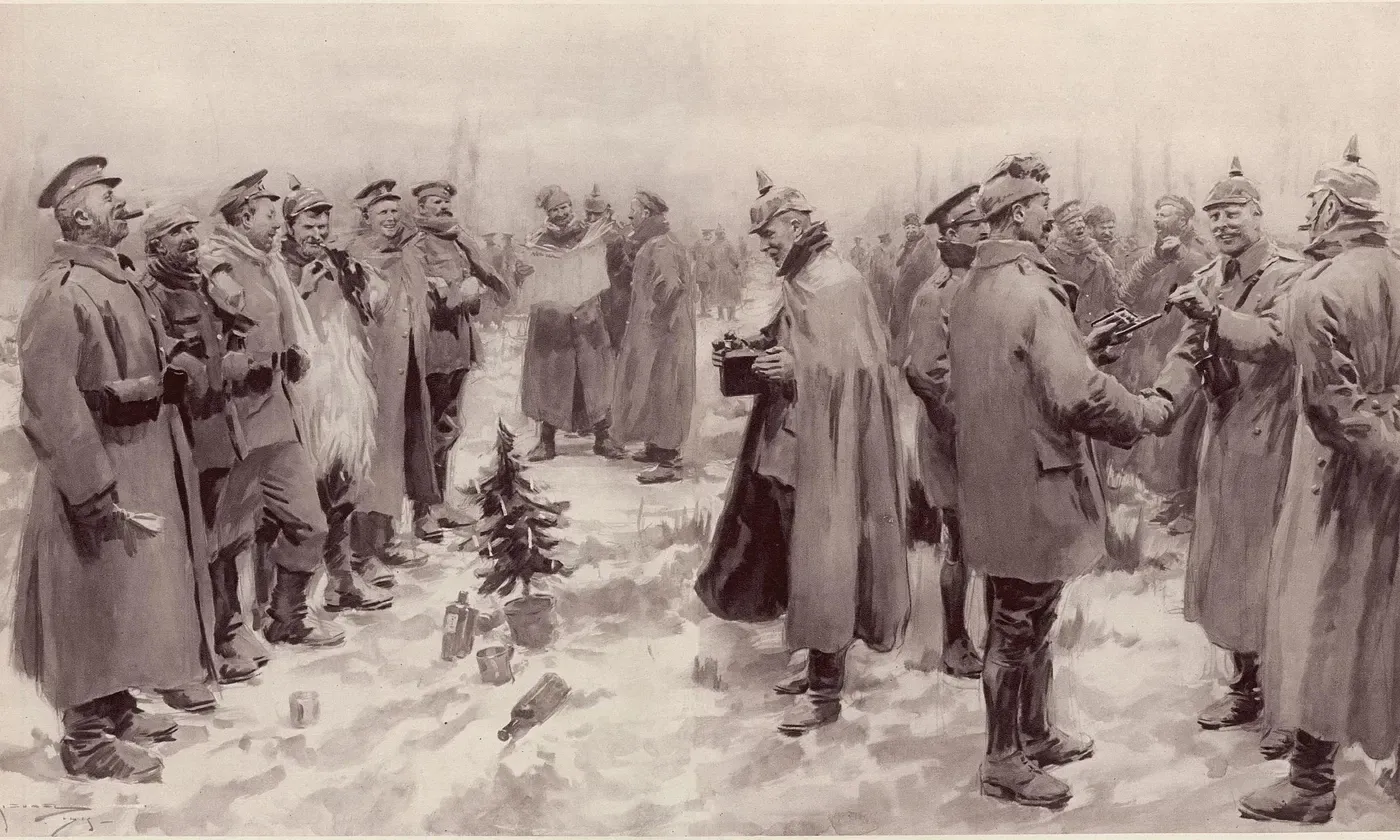 Illustration of the Christmas Truce, 1914
If we are to achieve this goal, the approach we adopt must meet the needs of both our most ubiquitous users, and our most extreme ones.
By far, the most ubiquitous form of media capture in the world is the smartphone — accounting for 92.5% of all photos on a daily basis. It provides all of the technology needed to verify the location and authorship of the media, and the typical consumer is more concerned with credit (ie establishing copyright and ownership) than privacy (protecting the details of their location and identity).
However, the requirements of the most extreme media are the opposite — collection of intelligence or documenting the realities of law enforcement, war, or sensitive communications requires the utmost in discretion. The very fact that media was captured must be deniable. Any and all metadata that could indicate the sources or methods of the media, while vital to be able to verify, must be stored independent from the media itself. Publishing of either the media or the metadata cannot be a requirement of verification.
Thus, our system of media verification must be adaptable : allowing us to address the challenges of media copyright, the provenance of related and derived media products, and the tertiary concerns of AI training data and models, separately.
Such a modular system is within our grasp.
Want to see Polyguard in action?
Experience real-time identity verification for your communication security.